阅读并同意隐私协议、MTA和使用条款后进行下一步!
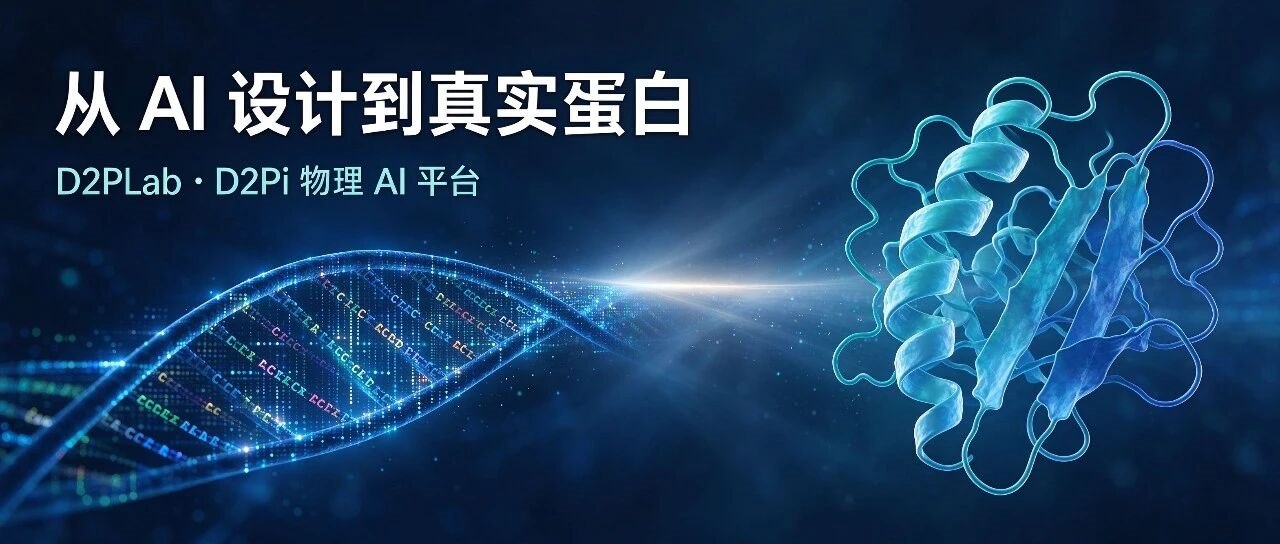
Not long ago, on an episode of the American Optimist podcast, the host spoke with two reinforcement learning leads from Anthropic about the development of AI. One important conclusion: AI will reshape life science and become its most important technological foundation, and life-science progress driven by AI will release greater social value than AI does in software engineering. Yet experimental validation in the physical world is becoming the biggest bottleneck in the intelligent leap of biology, far outpacing the rate at which models evolve in biological computing. The reason is clear: efficiency gains in software engineering are important, but life science concerns disease treatment, drug discovery, healthy longevity, food nutrition, biomanufacturing and quality of human life. Progress in life science is not only about raising production efficiency, but about improving the way humanity understands life, designs life molecules and manufactures biological products. AI can already propose hypotheses, design molecules and generate protein sequences faster, but these designs must still be synthesized, tested and validated in real experiments — constrained by cell culture, manual operation, experimental throughput, equipment capability and data-feedback efficiency.
The competition in the next stage of life science is not only a contest of AI models, but of who can convert AI designs into real experimental results faster. The D2PLab + D2Pi Physical AI platform built by Healthcode on its D2P cell-free protein synthesis technology is exactly the best answer to this critical bottleneck.
Over the past few years, AI breakthroughs in life science have mainly happened on the computing side. From protein structure prediction to protein sequence generation; from antibody design to enzyme engineering; from drug discovery to functional protein optimization — AI models are expanding the design space of life science at an unprecedented pace.
But the biggest difference between life science and the software industry is this: software code can be run and checked directly in digital space, whereas protein sequences must be synthesized and experimentally validated. An AI-designed protein that scores high in a model does not necessarily express in a real system; even if it expresses, it may not fold correctly; even if it folds correctly, it may not have the expected activity, stability, solubility and manufacturability. Therefore, AI life science must complete:
AI protein design → Protein experimental synthesis → Function testing → Data feedback → Model re-optimization
Without a wet-lab loop, AI can only stay at the level of computational prediction; with a wet-lab loop, AI can keep evolving through real-world feedback. That is why a truly competitive AI life science company will not be the one with the strongest models, but the one that can perfectly connect AI with the wet lab.
If the loop of software AI is “write code — run — debug — write code again”, then the loop of protein AI is: design sequence — synthesize protein — test function — feed back to the model. And the hardest part of the protein AI loop is the physical execution step in the middle.
Conventional protein expression usually depends on cell-based systems and requires vector construction, cell transformation, culture, induction, lysis, purification and detection. For a small number of well-established proteins, this system still works; but for the large number of new sequences generated by AI, it is clearly too slow, too heavy and too limited in throughput. AI can generate hundreds or thousands of candidate sequences at once, while conventional wet labs can often validate only a tiny fraction of them. As a result, AI's design capability is bottlenecked by experimental validation capacity.
This is the real meaning of protein Physical AI in life science: AI does not merely propose designs — it enters the real physical world through automated experimental platforms; experimental platforms do not merely execute tasks — they continuously generate data that can be fed back, trained on and iterated; models and experiments are no longer separated, but form a continuously evolving loop.
Healthcode's core underlying technology is D2P cell-free protein synthesis (Cell-Free Protein Synthesis, CFPS). D2P — DNA-to-Protein — is a technical route that starts from a DNA template and rapidly synthesizes proteins in vitro.
On one hand, D2P requires no strains, no cell transfection and no cell-line construction, with a protein synthesis time of about 3 hours — 10–100 times faster than conventional cell-based synthesis. On the other hand, D2P breaks free from the constraints of cells and can synthesize novel protein sequences that are difficult to produce with conventional cell expression, being friendlier to some hard-to-express or toxic proteins; combined with AI, it can explore a much broader protein sequence space.
Therefore, D2P is the best partner for protein AI. It can convert AI-designed digital sequences into real protein samples faster. In one sentence: AI outputs sequences, D2P outputs proteins. This step looks straightforward, yet it is the key to moving AI life science from “computational intelligence” to “physical intelligence”.
The goal of the D2PLab + D2Pi protein Physical AI platform built by Healthcode is not to provide a single piece of software or a single instrument, but to build a complete closed-loop system from AI protein design to automated protein synthesis, detection and data feedback.
In this system, D2PLab, as an AI analysis and design tool covering everything from molecular biology to protein engineering, provides users with a wide range of AI design capabilities. Users can optimize and design proteins around target functions, manage candidate sequences and submit synthesis tasks, so that AI design results no longer stay in files or spreadsheets but enter the subsequent experimental workflow directly.
The D2Pi intelligent automated laboratory system plays the role of the protein manufacturing execution platform. It is an intelligent, automated system built on D2P cell-free protein synthesis technology, covering nucleic acid preparation, amplification and extraction, as well as cell-free protein synthesis, purification and detection. It is the world's leading and China's only automated solution adapted to the complete cell-free protein synthesis process, with modular workstations that can be flexibly assembled according to needs to realize automated, modular and composable protein manufacturing workflows at different throughputs.
Combined, D2PLab + D2Pi form a complete protein Physical AI chain: AI designs proteins → D2PLab manages and submits sequences → D2Pi automatically synthesizes and detects → experimental data is fed back → supporting the next round of AI optimization. AI no longer only “thinks”, but can “do” through D2P technology and the D2Pi automation system; experiments are no longer isolated validations, but become the data source for continuous model evolution.
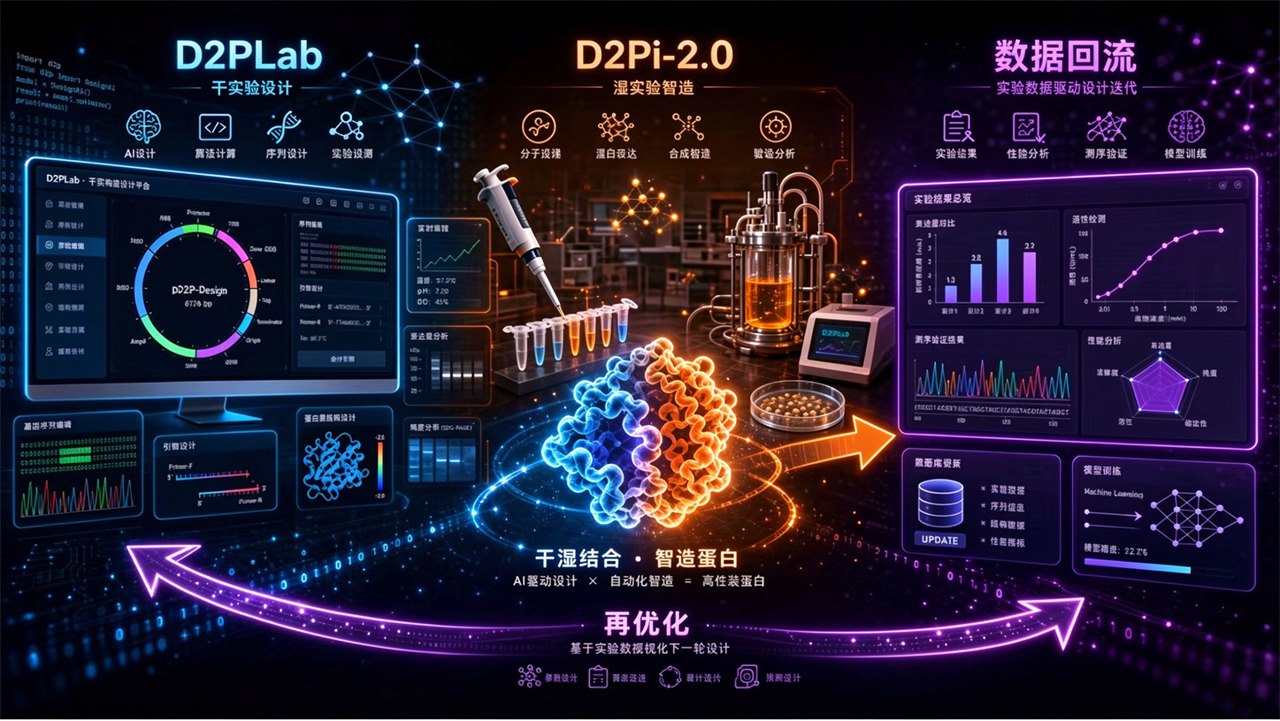
So that small and medium teams in universities and research institutes, as well as start-ups, can access high-quality scientific resources, and so that Healthcode's protein Physical AI solution can serve pharmaceuticals, food, agriculture, materials and other industries, Healthcode has co-built an AI protein manufacturing joint laboratory with the National Facility for Protein Science in Shanghai, and built a new generation of the D2Pi-2.0 high-throughput cell-free protein synthesis and screening system.
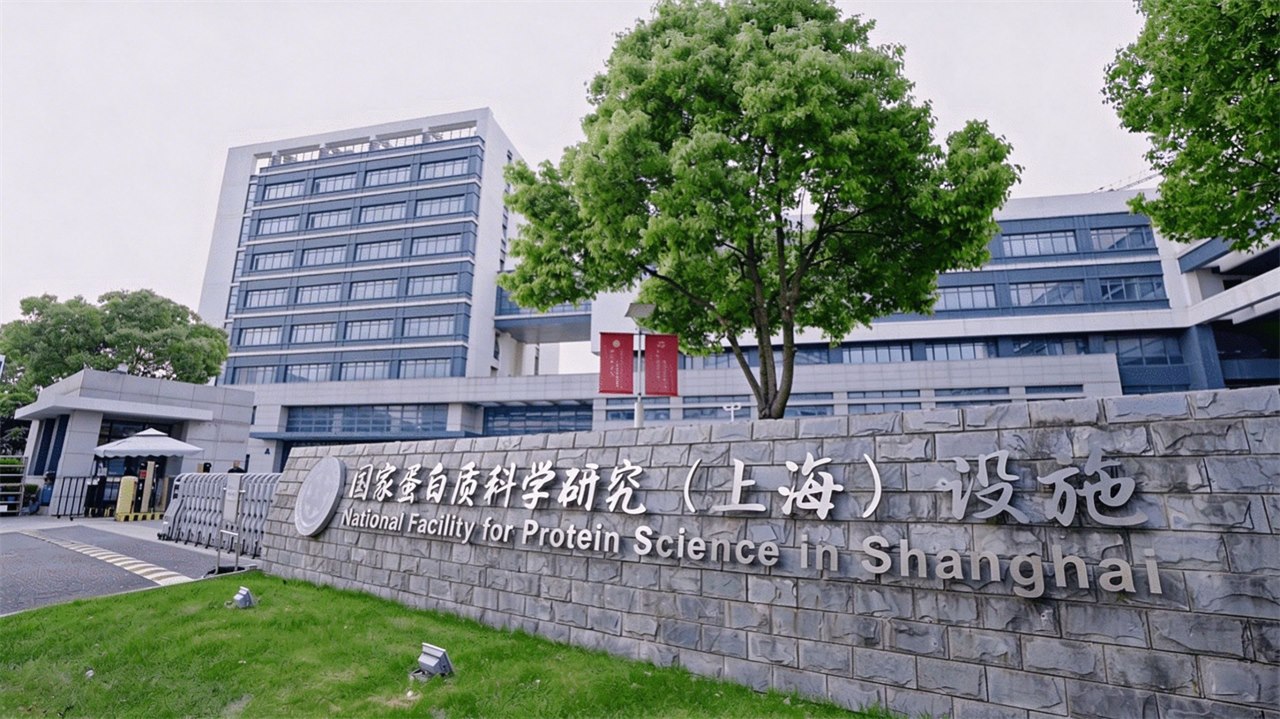
D2Pi-2.0 targets AI-designed proteins, enzyme engineering, antibodies, binding proteins and functional protein screening. It can synthesize and screen 10,000 proteins every day, providing AI protein science with the capability to rapidly validate large-scale candidate sequences.
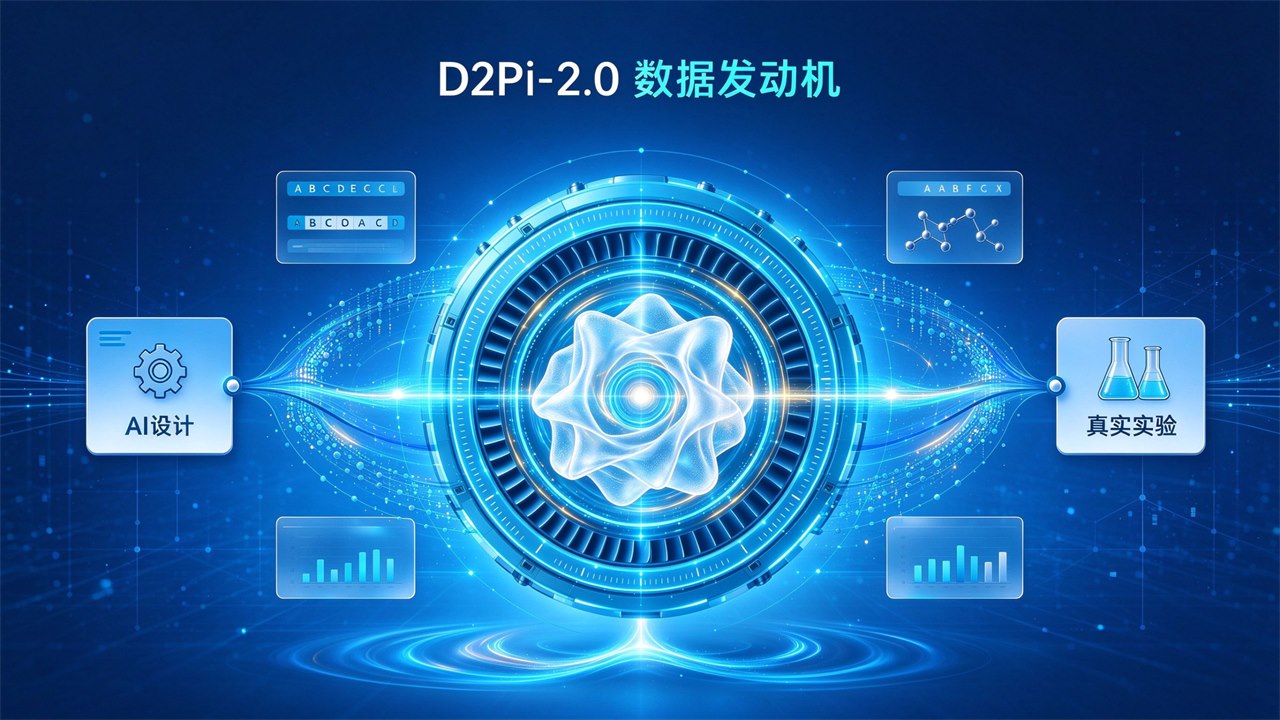
This means that D2Pi-2.0 is not merely a faster protein synthesis platform, but the data engine of AI protein design. It brings more AI designs into real experiments; feeds more experimental results back to models; moves AI from being driven by public databases to being driven by high-quality dedicated experimental data; and moves protein design from “prediction” to “validation — learning — redesign”.
If the last stage of AI competition took place mainly in the digital world, then the truly profound industrial revolution of the next stage will happen where AI connects with the physical world. Life science is one of the most critical scenarios.
AI can propose new proteins, new drugs, new enzymes, new biomaterials and new therapeutic approaches, but these possibilities must be synthesized, validated and iterated through real experiments. Wet-lab capability is becoming the biggest bottleneck in the leap of AI life science; platforms that can perform protein synthesis and screening with high throughput, automation and low cost will become important infrastructure for the future AI bio-industry.
The D2PLab + D2Pi Physical AI platform built by Healthcode on D2P cell-free protein synthesis technology is exactly the best solution for AI life science.
AI is responsible for proposing possibilities.
D2P is responsible for turning possibilities into proteins.
D2Pi is responsible for turning proteins into high-throughput experimental data.
The D2PLab + D2Pi platform closes all of this into a continuously evolving loop.
Only when AI's design capability is combined with D2P's protein manufacturing capability does the next industrial revolution in life science truly begin to enter reality.