阅读并同意隐私协议、MTA和使用条款后进行下一步!
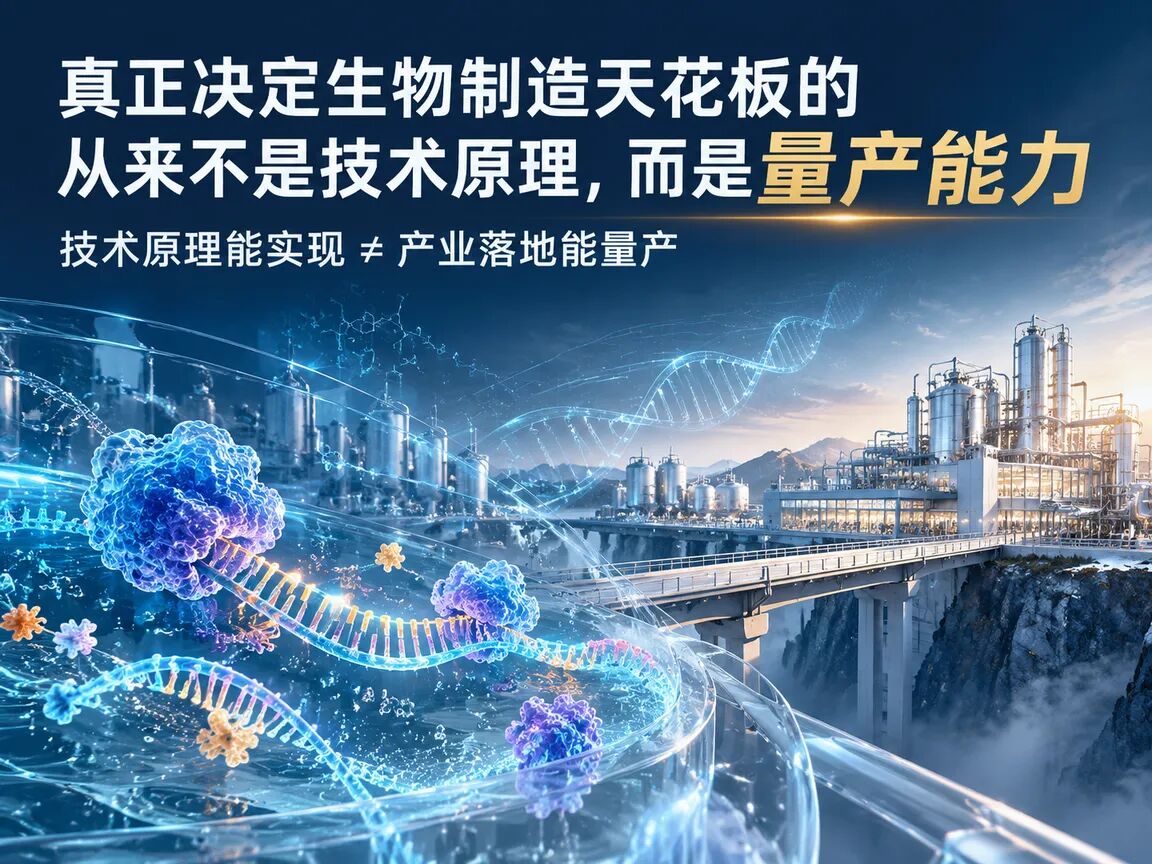
What ultimately sets the ceiling of biomanufacturing has never been the principle of the technology, but the capacity for mass production
In the synthetic biology industry, many people have long confused one core logic: being able to realize a technical principle is not the same as being able to mass-produce it.
Cell-free protein synthesis (CFPS) is the most typical example. After more than seventy years of scientific exploration, this technology requires no cultivation of living cells: ribosomes, translation factors and aminoacyl-tRNA synthetases are extracted directly, and transcription and translation are completed independently in vitro, compressing the traditional "days-long cycle" of cell-based synthesis directly to the hour level.
Yet for seventy years, global CFPS has remained at the laboratory stage. Its core bottleneck is not whether proteins can be synthesized, but whether the process can be scaled up stably and controllably. Once the reaction volume increases, multiple problems erupt simultaneously — imbalanced mass transfer, insufficient energy supply, inhibition from accumulated by-products — leaving cell-free synthesis stuck at the micro-scale research stage worldwide and unable to move toward industrialization.
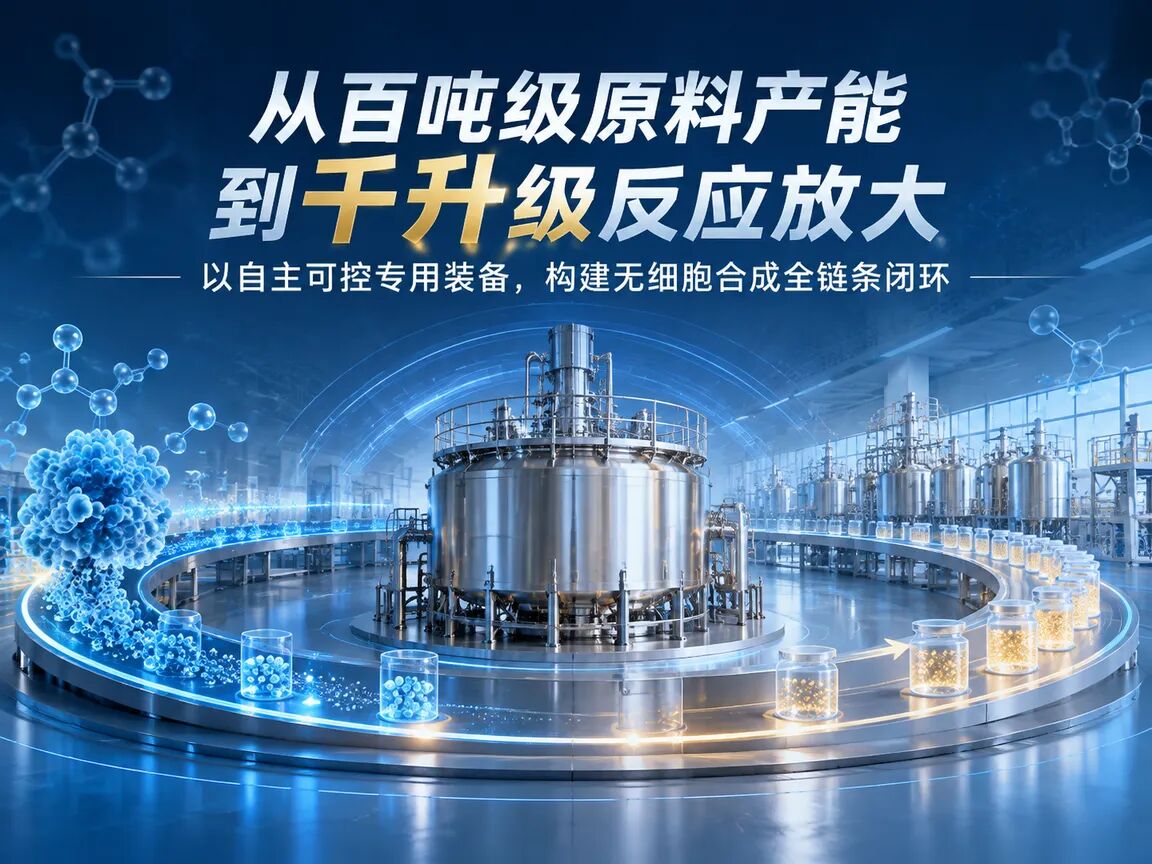
Healthcode has fully opened up this industrialization path and advanced it to the only mature, implemented stage in the world: in 2020 it built the world's first 5-ton-scale D2P production line, and in 2023 it raised the batch scale to the 160-ton level, becoming the only cell-free synthesis production line in the world to achieve mass production above the hundred-ton scale, with overall annual capacity formally entering the ten-thousand-ton level.
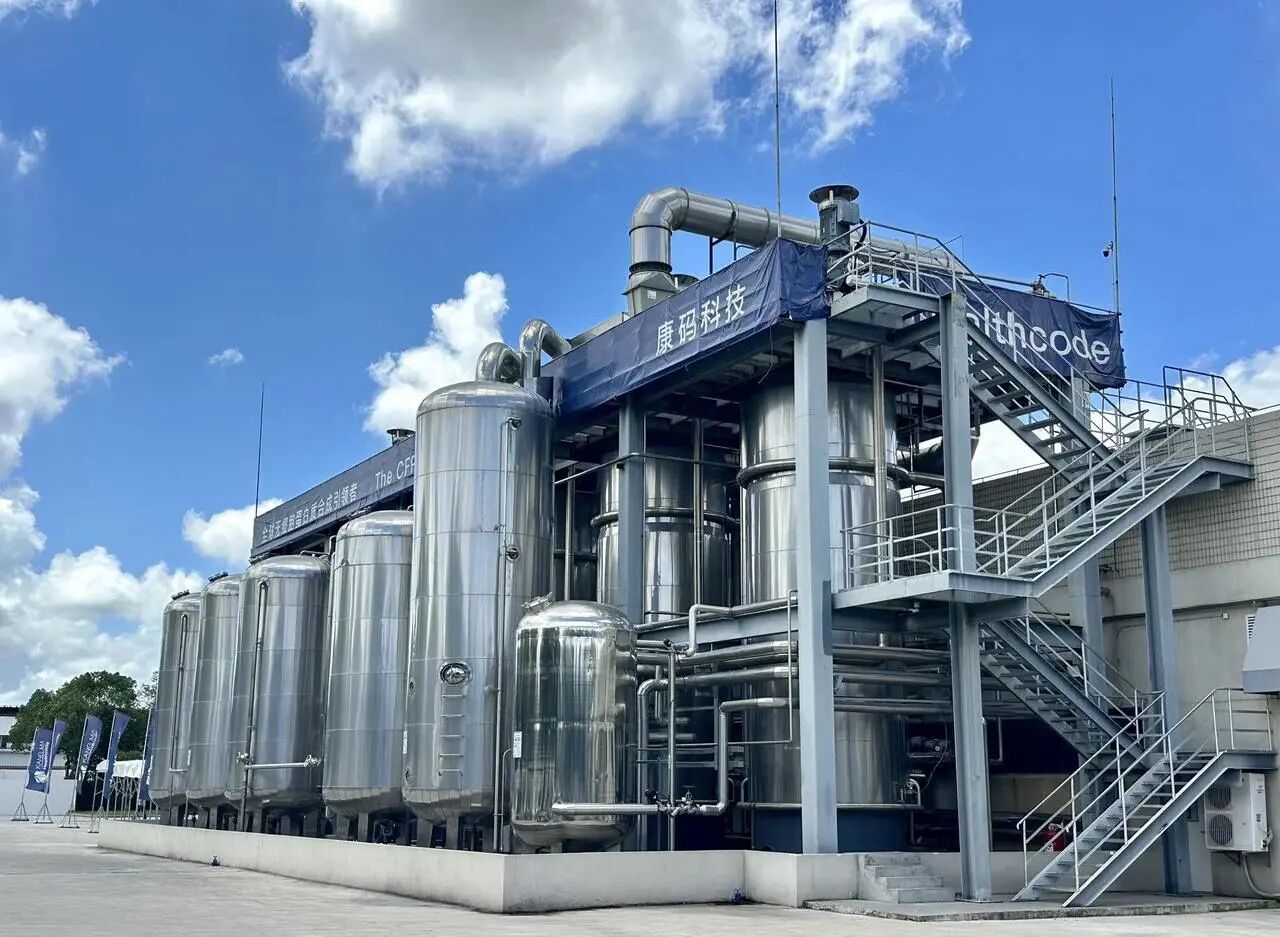
Healthcode's in vitro protein synthesis plant: where cell-free synthesis moves from process to capacity
With large-scale production lines in place, the industry's question has upgraded entirely from "is the technology feasible" to "can the process be standardized and reproduced" — and the core foundation supporting standardization, reproducibility and scalability is self-controlled, purpose-built intelligent manufacturing equipment.
Having firmly established hundred-ton-scale raw material capacity and completely broken through the raw material supply bottleneck of cell-free synthesis scale-up, Healthcode once again led the world's technological iteration: in 2024 it officially released the first dedicated reactor for large-scale cell-free protein synthesis, taking the lead in completing the leap from hundred-ton-scale raw material capacity to thousand-liter-scale batch in vitro synthesis. Once again setting a global first and a world record, it fully filled the missing link in the full-chain closed loop of cell-free synthesis, from raw material mass production to reaction scale-up.
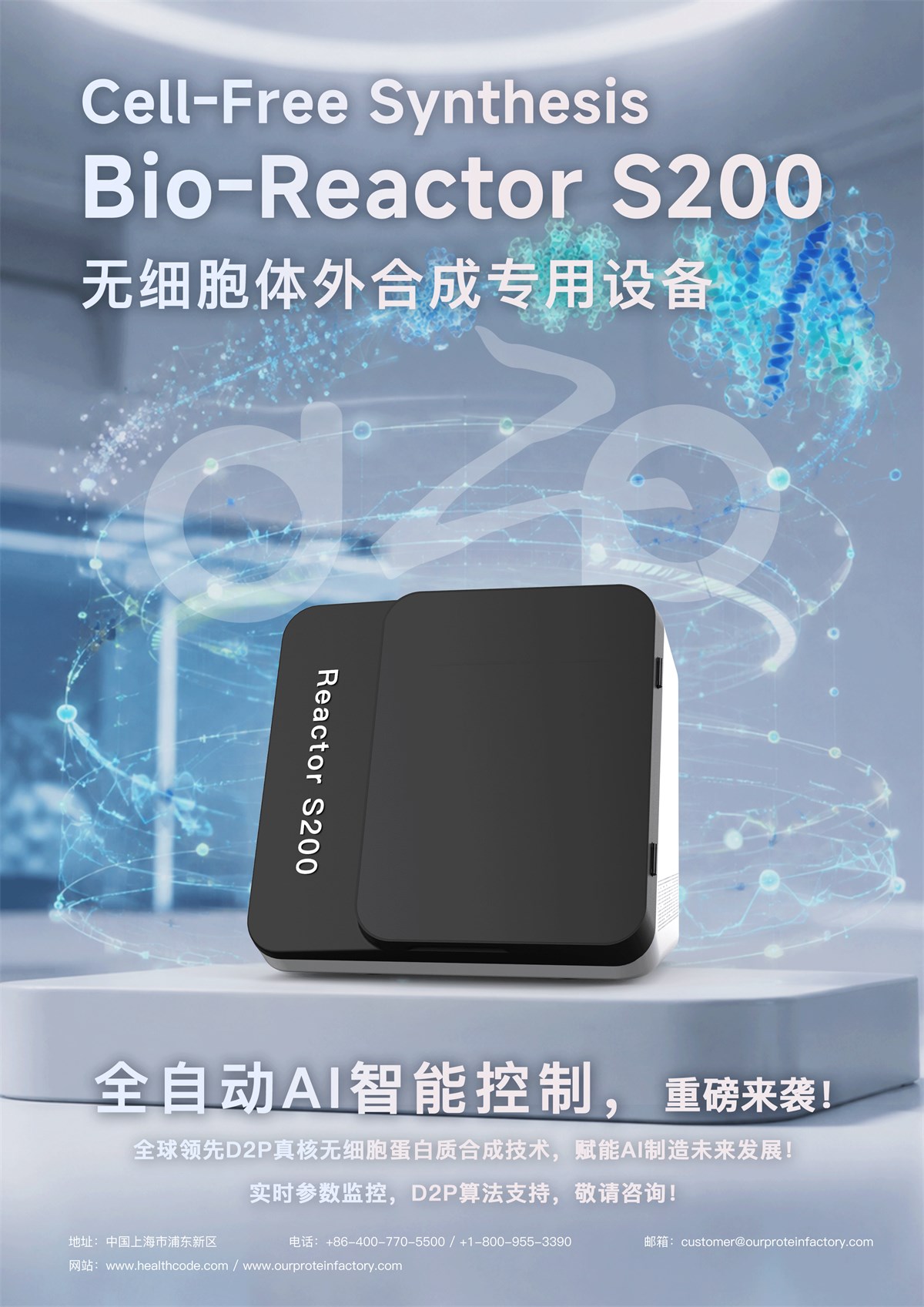
Healthcode recently launched S200, the world's first dedicated reactor suited to medium-to-large volume in vitro synthesis: 6 independent reaction vessels, 6 to 24 independent channels, a reaction volume of 10 to 200 mL per channel, and — paired with ProteinFactory Liter — support for systems above 1,000 mL, with up to 2.4 g per batch, 0.5 to 3 hours per batch, fully automatic AI control, digital full-process monitoring and remote operation support. The entire machine is 100% made in China.
Its value lies not in the parameters themselves, but in reconstructing the R&D logic of biomanufacturing: upgrading the past research model of "repeated trial and error, inefficient groping" into an industrialized model of "parallel groups, data accumulation, intelligent iteration". Manual experience is turned into standardized data assets, and experimental results become traceable, reproducible and scalable.
To judge whether a synthesis technology has truly landed in industrialization, three criteria matter most: whether there is dedicated equipment, whether the scale-up path is continuous, and whether the production process is programmable. When a technology begins to clearly define process boundaries and optimize engineering shortcomings, it means it has completely left the laboratory and entered a mature industrialization stage.
For a long time, global cell-free protein synthesis has been trapped by the technical gap of laboratory micro-scale systems, with the industry generally relying on 96-well and 384-well micro-reaction systems that can only validate proteins at the microliter and milliliter level, never breaking through the scale-up barrier from laboratory research to medium- and large-scale industrialization. The arrival of Healthcode's S200 dedicated intelligent reactor completely breaks this global technical bottleneck that has lasted for decades, becoming the world's first core equipment to upgrade a cell-free eukaryotic synthesis system from micro-scale microwell reactions to large-scale reaction vessels.
It truly achieves stable gram-level synthesis of laboratory-grade high-activity proteins, and — relying on a pure eukaryotic in vitro system — delivers ultra-high fidelity, precise protein folding, and high-quality, high-efficiency protein preparation. With a globally pioneering technical architecture, an AI full-process intelligent control system and fully self-controlled purpose-built intelligent manufacturing hardware, and with the hard-core strength of 100% Chinese intelligent manufacturing, it has completely opened up the full industrialization blueprint of cell-free protein synthesis: from micro-scale research validation to upgraded pilot scale-up, and on to kilogram-level and above industrial mass production.
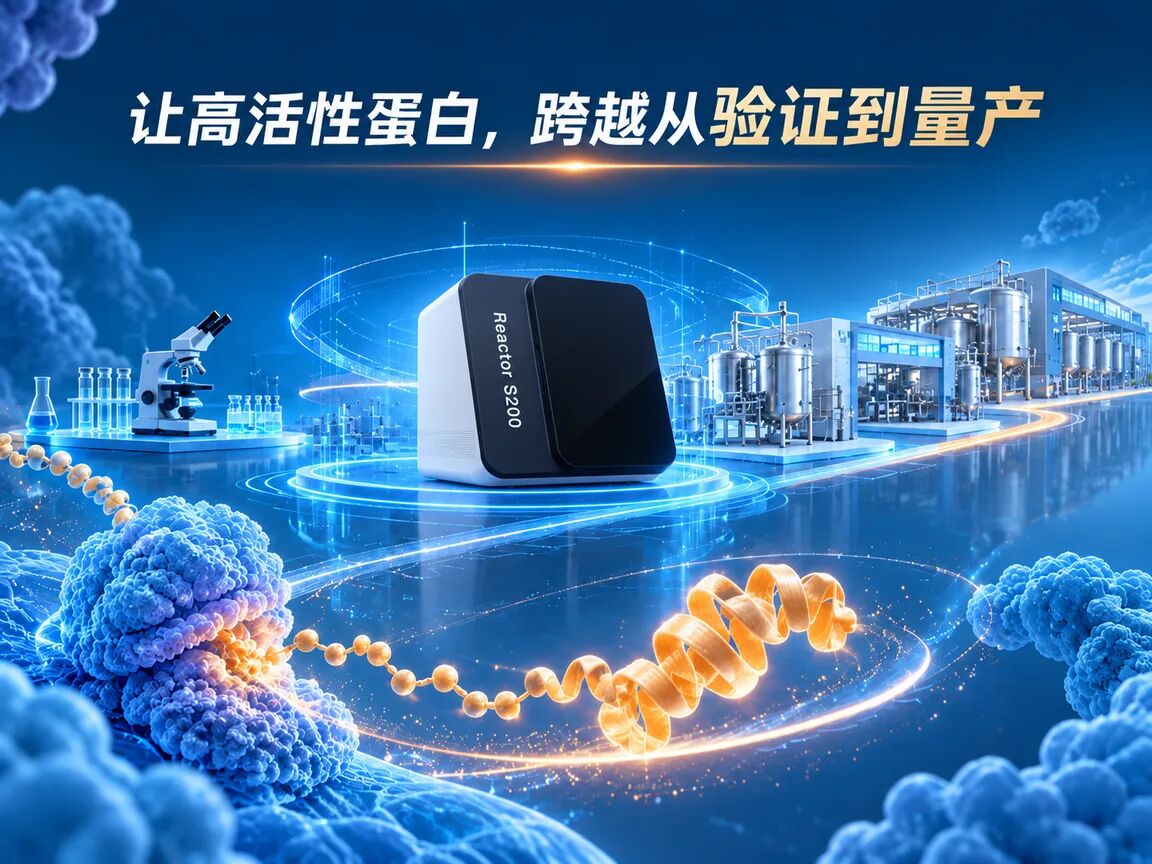
This historic breakthrough formally establishes Healthcode's absolute leading position, its position as an industry standard setter and its position as a technological benchmark in the global cell-free protein synthesis field, and completely rewrites the development landscape of the global CFPS industry.
It not only builds a self-controlled hardware foundation for the leapfrog upgrade of China's next-generation biomedicine and green biomanufacturing industries, but also provides an indispensable disruptive physical carrier and core equipment support for the industrialization of AI protein design and frontier synthetic biology research, strongly driving the global biomanufacturing industry into a new era of intelligence, scale and industrialization.
Made in China, Leading the World!