
阅读并同意隐私协议、MTA和使用条款后进行下一步!


forget password?
By logging in, you agree to our Privacy policy, MTA and Terms of Use.
By logging in, you agree to our Privacy policy, MTA and Terms of Use.
Nature Structural...
3938
 1
1
 12
12
Posted in 2018-02-05
Article (PDF Available)in BMC Biology 12(1):76 October 2014 with 383 Reads,David A Baum
Background Although the origin of the eukaryotic cell has long been recognized as the single most profound change in cellular organization during the evolution of life on earth, this transition remains poorly understood. Models have always assumed that the nucleus and endomembrane system evolved within the cytoplasm of a prokaryotic cell. Results Drawing on diverse aspects of cell biology and phylogenetic data, we invert the traditional interpretation of eukaryotic cell evolution. We propose that an ancestral prokaryotic cell, homologous to the modern-day nucleus, extruded membrane-bound blebs beyond its cell wall. These blebs functioned to facilitate material exchange with ectosymbiotic proto-mitochondria. The cytoplasm was then formed through the expansion of blebs around proto-mitochondria, with continuous spaces between the blebs giving rise to the endoplasmic reticulum, which later evolved into the eukaryotic secretory system. Further bleb-fusion steps yielded a continuous plasma membrane, which served to isolate the endoplasmic reticulum from the environment. Conclusions The inside-out theory is consistent with diverse kinds of data and provides an alternative framework by which to explore and understand the dynamic organization of modern eukaryotic cells. It also helps to explain a number of previously enigmatic features of cell biology, including the autonomy of nuclei in syncytia and the subcellular localization of protein N-glycosylation, and makes many predictions, including a novel mechanism of interphase nuclear pore insertion.
Abstract
Background: Although the origin of the eukaryotic cell has long been recognized as the single most profoundchange in cellular organization during the evolution of life on earth, this transition remains poorly understood.Models have always assumed that the nucleus and endomembrane system evolved within the cytoplasm of aprokaryotic cell
An inside-out origin for the eukaryotic cell (PDF Download Available). Available from: https://www.researchgate.net/publication/267729007_An_inside-out_origin_for_the_eukaryotic_cell [accessed May 31 2018].
Results: Drawing on diverse aspects of cell biology and phylogenetic data, we invert the traditional interpretationof eukaryotic cell evolution. We propose that an ancestral prokaryotic cell, homologous to the modern-day nucleus,extruded membrane-bound blebs beyond its cell wall. These blebs functioned to facilitate material exchange withectosymbiotic proto-mitochondria. The cytoplasm was then formed through the expansion of blebs aroundproto-mitochondria, with continuous spaces between the blebs giving rise to the endoplasmic reticulum, whichlater evolved into the eukaryotic secretory system. Further bleb-fusion steps yielded a continuous plasmamembrane, which served to isolate the endoplasmic reticulum from the environment.
Conclusions: The inside-out theory is consistent with diverse kinds of data and provides an alternative frameworkby which to explore and understand the dynamic organization of modern eukaryotic cells. It also helps to explain anumber of previously enigmatic features of cell biology, including the autonomy of nuclei in syncytia and thesubcellular localization of protein N-glycosylation, and makes many predictions, including a novel mechanism ofinterphase nuclear pore insertion.
Keywords: Archaea, Cell topology, Cytoplasmic continuity, ER and endomembrane organization, Evolution ofeukaryotes, Mitochondria, Nuclear pore insertion, Origin of the nucleus, Vesicle trafficking.
Background
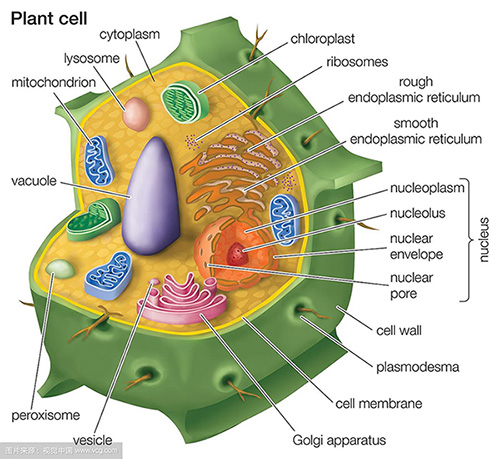
The emergence of the eukaryotic cell with its nucleus,endomembrane system, and membrane-bound organellesrepresented a quantum leap in complexity beyond anythingseen in prokaryotes [1-3]. The sophisticated cellularcompartmentalization and the symbiotic association withmitochondria are thought to have enabled eukaryotes toadopt new ecological roles and provided a precursor to nu-merous successful origins of multicellularity. Nevertheless,despite being recognized as the single most profound evo-lutionary transition in cellular organization, the origins ofthe eukaryotic cell remain poorly understood.The key events in the evolution of eukaryotes were theacquisition of the nucleus, the endomembrane system.and mitochondria. It is now established beyond reason-able doubt that mitochondria are derived from endosym-biotic α-proteobacteria [4-6]. Existing models forthe origin of eukaryotes generally agree that proto-mitochondria entered the cell via phagocytosis. Likewise,the most widely favored models for the origins of thenucleus assume that it was formed within a prokaryoticcell as the result of invaginations of the plasma mem-brane - whether by phagocytosis of an endosymbiontthat corresponds to the nuclear compartment or by theinternalization of membranes that became organizedaround the chromatin (reviewed in [7] and discussedfurther below). Thus, existing theories for the origin ofeukaryotes share the assumption that the nucleus is anovel structure formed within the boundaries of anexisting, and largely unaltered, plasma membrane [8] -they are outside-in models.Here, we set out to challenge the outside-in perspec-tive. Archaea often generate extracellular protrusions[9-14], but are not known to undergo processes akin to.
All comments 1

Comment success,botain NB!

沪公网安备 31011502014489号
©2015- Kangma-Healthcode. All Rights Reserved. America




sdsdsdsd